In the early drafts of The Conservatory, the magic system was much “cleaner.” You bonded with a plant, you got a power, you moved on.
But that felt wrong. In the Exclusion Zone, nothing is free.
I wanted the magic to feel like a transaction. If you want the strength of a tree, you have to accept the rigidity of one. That is where the concept of the Iron-Wood Graft came from—and why it is one of the most terrifying abilities in the book.
The Gift The Iron-Wood graft (scientific name: Quercus ferreus) grants the user skin as hard as diamond. It makes them nearly invincible in close-quarters combat. A blade simply skids off their forearm; a bullet might crack a rib but won’t penetrate. It is the ultimate shield.
The Curse The problem with wood is that it doesn’t bend.
The more an Iron-Wood soldier uses their ability, the more their joints begin to calcify. It starts with stiffness in the mornings—a knee that won’t unbend, fingers that lock around a coffee mug.
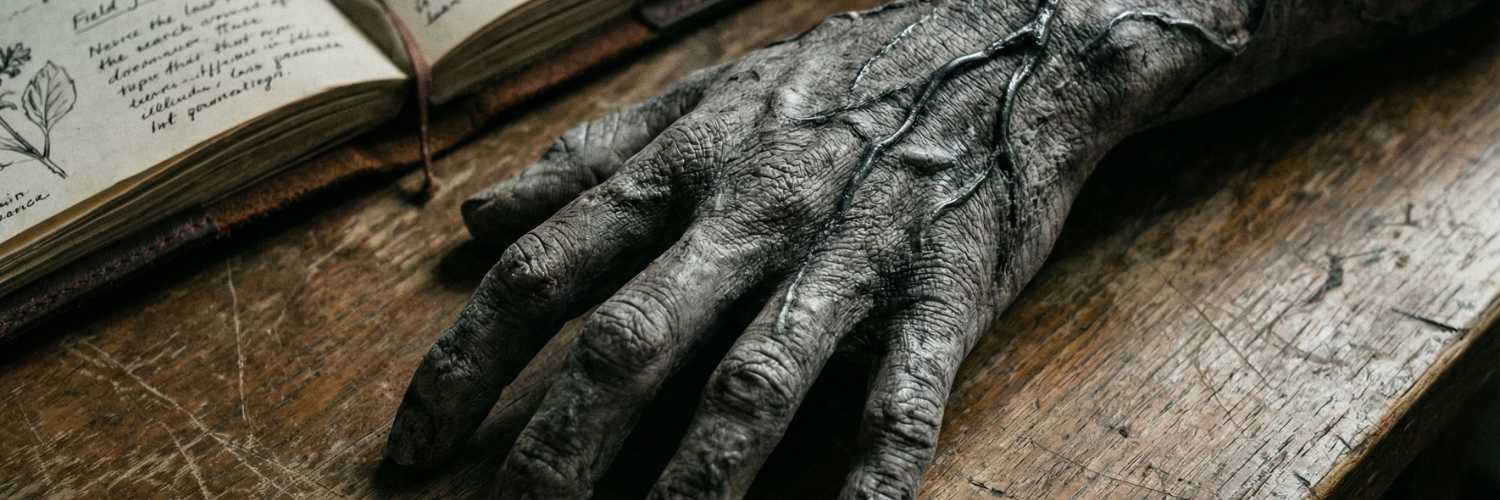
If they push it too far, or if they draw too much power at once, the “Petrification Effect” sets in. The skin takes on a permanent gray, bark-like texture. Their movements become jerky and slow. Eventually, they simply stop moving altogether.
From the Archives There is a scene in Chapter 12 where Varic warns the recruits about “The Garden of Statues.”
“They aren’t statues,” Varic said, his voice low. “They were the graduating class of ’94. They just didn’t know when to stop.”
That line is one of my favorites because it encapsulates the horror of this world. The statue isn’t a monument to a hero; it is the hero.
Author’s Note I spent a lot of time researching Fibrodysplasia ossificans progressiva (FOP), a real-world condition where muscle turns to bone, to understand the physical horror of losing your mobility. It’s a reminder that in this story, the greatest threat isn’t always the monster in the woods. Sometimes, it’s your own armor.